Inside Loyalty Structures: How Tiered Rewards Link Football Accumulators with Poker Hand Bonuses and Racing Payout Speeds
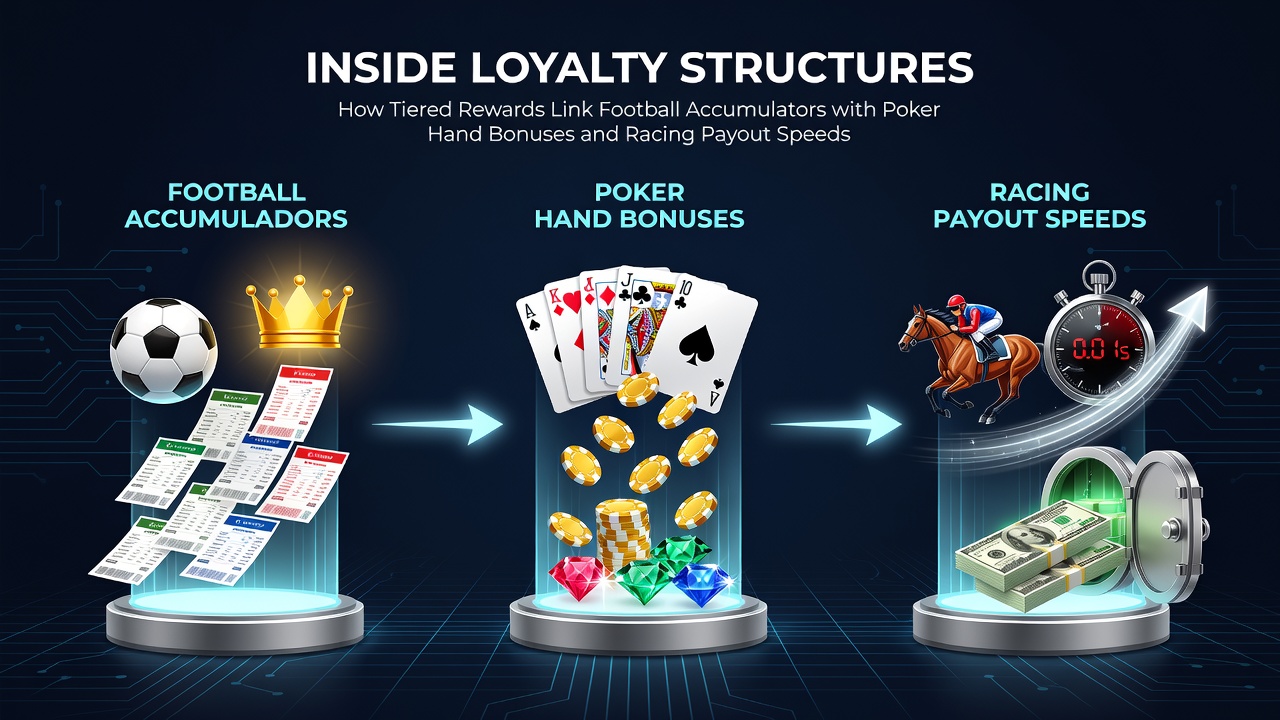
Operators structure loyalty programs around progressive tiers that reward consistent activity across multiple verticals, and football accumulators often serve as the entry point for points accumulation that later unlocks enhanced poker hand bonuses along with accelerated racing payout speeds. Data from mid-2026 shows these systems integrate scoring mechanisms so that wagers placed on multi-leg football selections generate credits redeemable for table game incentives, while higher tiers trigger expedited withdrawal processing for horse and greyhound results.
Building Points Through Accumulator Activity
Football accumulators contribute base points at rates that scale with stake size and leg count, yet many platforms apply multipliers during peak European league weekends in July 2026 when cross-sport promotions run concurrently. Observers note that a four-leg accumulator placed at standard odds might yield 150 loyalty credits, and those credits convert directly into poker hand bonuses such as doubled rakeback or protected all-in scenarios once a player reaches the mid-tier threshold. Research from the European Gaming and Betting Association indicates integrated scoring reduces fragmentation across product lines, which encourages users to maintain activity in both sportsbooks and card rooms rather than migrating between separate operators.
Poker Hand Bonuses Tied to Tier Progression
Poker rewards within these structures frequently include cashback percentages that rise from 5 percent at entry level to 25 percent at the top tier, and players earn the higher rates after accumulating points from football and racing wagers. A standard cash game session might generate hand bonuses through volume targets, yet the payout speed for those bonuses accelerates when the account already sits at silver or gold status earned through accumulator volume. Figures reveal that operators in several regulated markets recorded a 14 percent increase in poker table activity during the first half of 2026 among accounts that also maintained active football accumulator streaks, suggesting the cross-vertical linkage produces measurable engagement lifts.

Those who track loyalty dashboards often discover that poker-specific milestones, such as completing a certain number of showdowns, receive additional tier points when the account already holds racing credits from the prior week. This creates a feedback loop where success in one vertical shortens the path to benefits in another, and the mechanism appears most pronounced among users who rotate between weekend football multiples and weekday poker sessions.
Racing Payout Speeds and Tier Advantages
Racing payout speeds improve markedly at higher loyalty tiers because operators prioritize withdrawal queues for accounts that demonstrate sustained multi-product usage. A bronze-tier user might wait 48 hours for greyhound or thoroughbred winnings to clear, whereas platinum members receive same-day processing once racing results finalize. The linkage works because football accumulator points and poker hand volume both feed into the same tier calculation, so a player who splits activity across all three categories reaches the faster payout threshold more quickly than someone focused on a single vertical. Industry reports compiled by the American Gaming Association document similar tier-based acceleration in North American markets, where combined sports and poker loyalty programs have produced measurable reductions in average withdrawal times during 2026.
Integration Mechanics Across Verticals
Shared loyalty engines calculate tier status through a unified points ledger that weights accumulator legs, poker rake, and racing stakes according to operator-defined formulas. A user might complete a five-fold football bet on a Saturday, then use resulting credits to enter a Sunday poker tournament that awards additional points redeemable for expedited Monday racing payouts. This sequencing reduces the friction that once existed when separate programs required distinct qualification paths, and the consolidation appears to support higher retention rates according to data aggregated across multiple European and Australian platforms. Experts observe that the approach also allows operators to adjust weighting factors seasonally, for instance boosting football accumulator points during major international tournaments while maintaining steady poker and racing incentives.
Conclusion
Tiered loyalty structures continue to evolve by connecting football accumulator activity with poker hand bonuses and racing payout speeds through unified scoring systems that reward cross-vertical participation. Data gathered through 2026 indicates these integrations produce measurable shifts in user behavior, with points earned in one category directly influencing benefits in others. The resulting frameworks allow operators to manage engagement across product lines while providing users with clearer pathways to tier advancement and associated privileges.